Domestic life
Inside the Victorian kitchen
Amazing new stoves and ready made foods
From hours before sunrise until late into the night, the kitchen was a beehive of activity in the proper Victorian home. The kitchen was usually a large room with an ample connected pantry and often held sleeping quarters for the cook or the kitchen maid.
Until the late 1700's the rich and poor shared some commonalties when it came to the kitchen and one of those was cooking on an open fire. But the turn of the century ushered in the more enlightened Victorian age and with it came the highly efficient cast iron ovens where the Lord of the Manor's cravings for rich baked goods and hearty puddings could be better served.
Although the new stove was efficient, it was anything but convenient. Coal had to be carried in regularly and ashes removed throughout the day. A servant would rise early to fire the stove and domestic kitchen staff were needed to keep it stoked all day.
Time passed and amazing new stoves were invented that allowed cooks to actually regulate temperatures by adjusting a series of flues and metal plates. Later, gas and electric stoves were introduced that allowed Victorian cooks to regulate temperature by simply twisting a knob. The Victorian age was an age of rebirth in the kitchen.
Copper pots, specially tinned on the inside to avoid chemical reactions with certain foods, were replaced with cast iron and the tastes of the Victorian family were reflected by the invention of mass produced kitchen gadgets such as pastry cutters, jelly and pie moulds ,and biscuit tins. The Victorian era also saw the introduction of tools that are still in use today including cheese graters, the can opener and potato peelers.
Refrigeration was not available and food preservation techniques like salting, pickling, drying, and smoking gradually gave way to the discoveries of Louis Pasteur and to the introduction of tin-canning (and the first can opener).
Soon, thanks to canning and the invention of the steam engine which enabled fresh food to be distributed throughout the country, fish, milk, meat and vegetables were available all year long. And for the first time, exotic meats and foods from other countries could be imported without fear of spoiling.
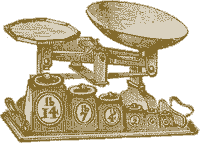
Perrier water, canned soup, canned pork & beans, Tabasco Sauce, Gulden Mustard and Folgers coffee are just a few of the household names of today that first appeared during the 1800's as the Victorians struggled between home cooking and the lure of "ready made foods".
Insects and rodents filled their bellies under counters and in cabinets while stews boiled and meat roasted. The cook was a valued position in the Victorian home and one who bore the title "Professed cook", meaning that they had the skills to create fancy banquets in addition to the daily meal, could earn as much as £40 a year. Cooks and kitchen maids saw to it that in spite of the challenges the Victorian kitchen produced sumptuous food that was fit for a Queen.
Sources L. Jackson, The Victorian Dictionary, 29 Sept 2005, <http://www.victorianlondon.org/>
Source and transcription details
- Source
- Legacy Cook’s Guide website
- Content status
- legacy-editorial
- Review status
- needs-editorial-review
- Legacy file
public/articles/victorian-kitchen.html- Legacy revision
8531e8373e9b- Source checksum
63b78adff53d70fa74e340d615fcbc09c8a9795ee0d7390b8bbaab81f1d2dc96- Legacy text checksum
6cb962d4c1dbd91d08becc6b41c0af2f552454d57a25a98857006dd64555baec
Cite this page
Inside the Victorian kitchen. Preserved legacy material in The Cook’s Guide digital archive.
https://www.thecooksguide.com/articles/victorian-kitchen.html